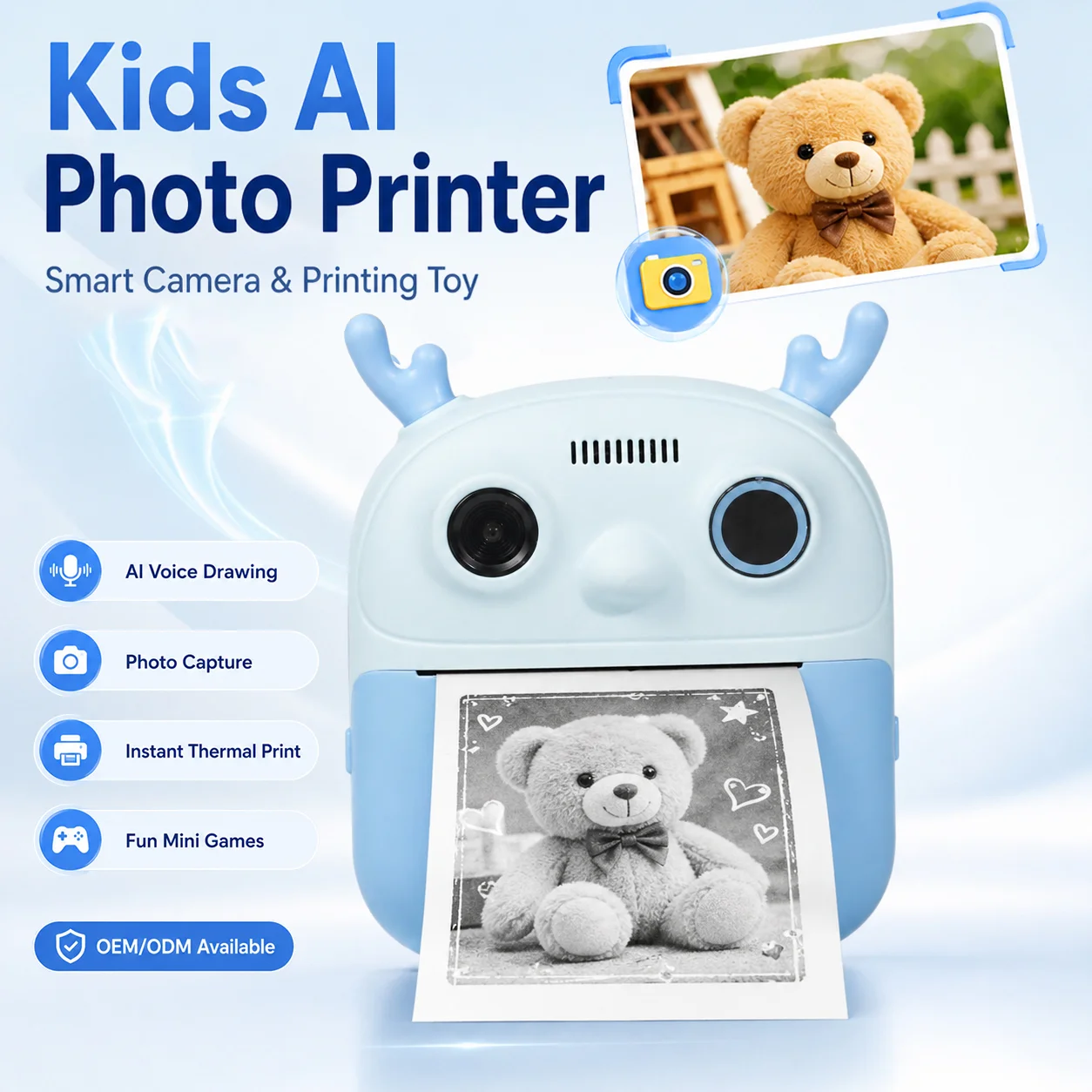
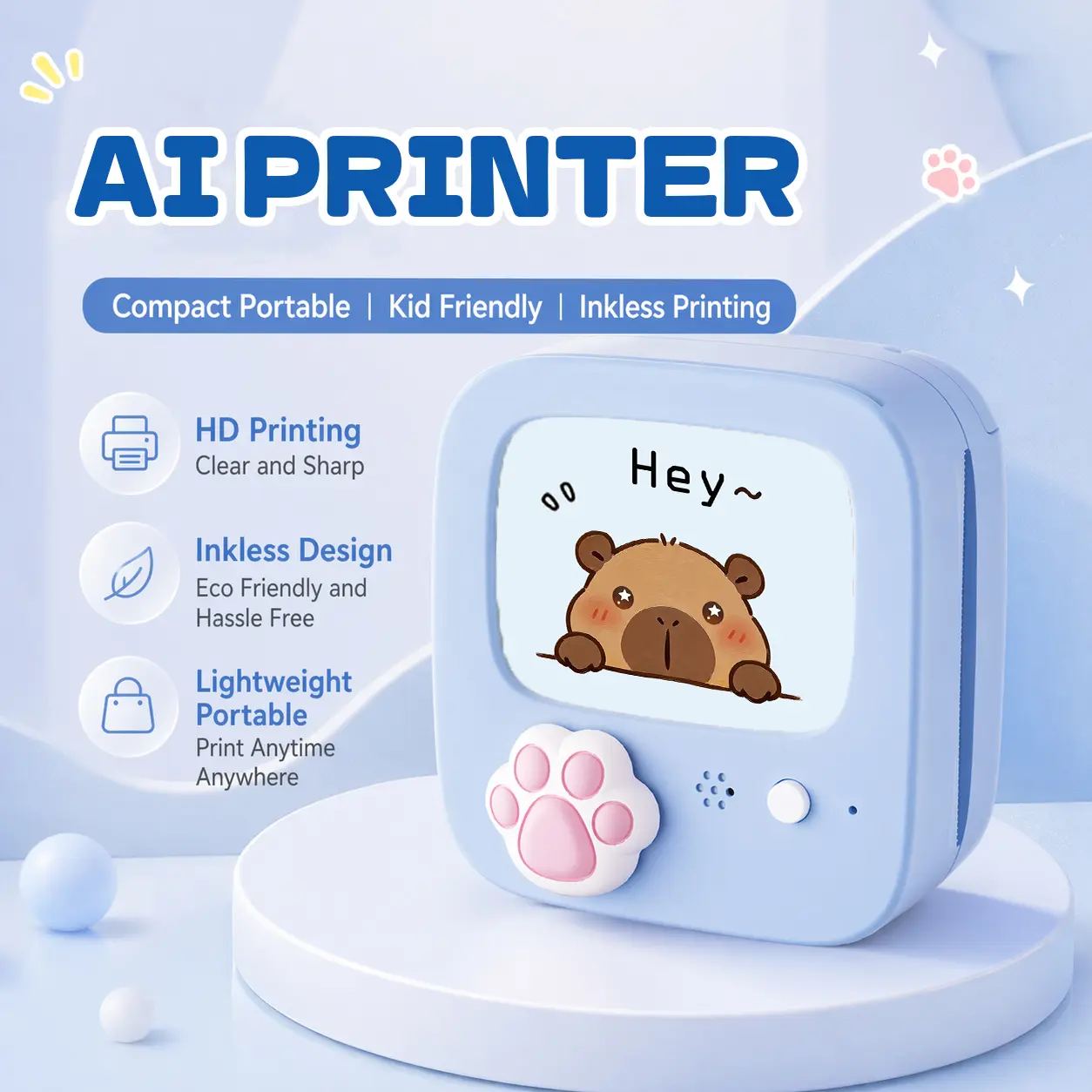
La inteligencia artificial ya no se limita a los teléfonos inteligentes, los chatbots o el software de productividad. Se está convirtiendo en una parte integral de los productos educativos para niños, los juguetes creativos y los dispositivos de aprendizaje inteligentes. Entre las últimas innovaciones, la impresora con IA para niños se ha consolidado rápidamente como una de las categorías de productos más interesantes.
A diferencia de las impresoras térmicas infantiles tradicionales, que se limitan a imprimir fotos o plantillas prediseñadas, Impresoras con IA para niños combina la tecnología de impresión térmica con contenidos generados por IA, lo que permite a los niños crear páginas para colorear, cuentos, rompecabezas e ilustraciones personalizadas con solo unas pocas indicaciones.
Para las marcas, los distribuidores y los importadores, este cambio supone algo más que una mejora del producto. Es un indicio de que las expectativas de los consumidores están cambiando y de que está surgiendo una nueva categoría con un importante potencial de crecimiento.
Entonces, ¿por qué están creciendo tan rápido las impresoras con IA para niños? Analicemos los factores clave que impulsan esta tendencia.
¿Qué es una impresora con IA para niños?
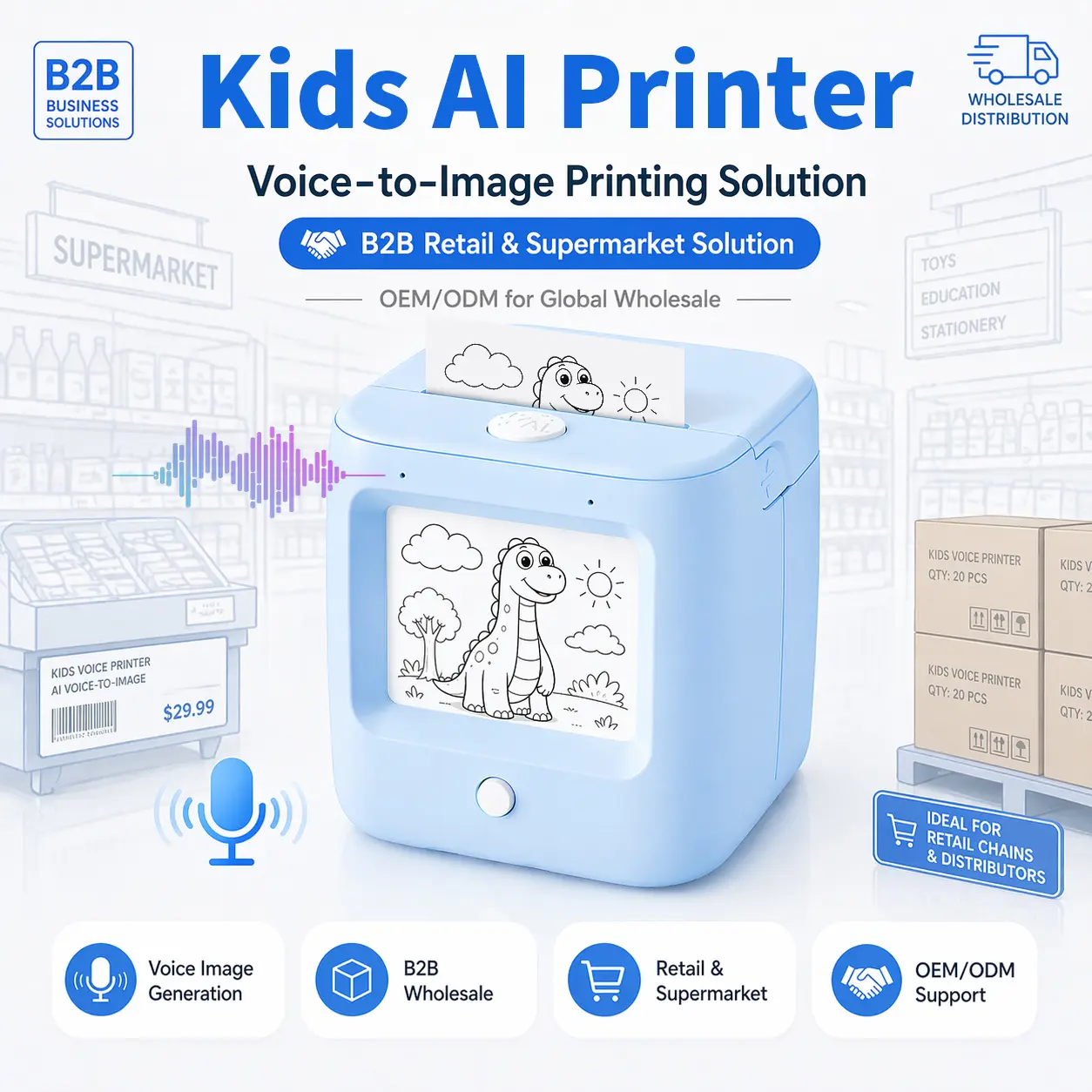
A impresora con IA para niños Es una impresora térmica portátil equipada con funciones de inteligencia artificial. En lugar de basarse únicamente en una biblioteca fija de plantillas imprimibles, puede generar contenido original a partir de las solicitudes de los usuarios, lo que hace que cada sesión de impresión sea más interactiva y creativa.
Cómo funcionan las impresoras con IA para niños
La mayoría de las impresoras AI conservan la misma tecnología de impresión térmica fiable que se utiliza en las impresoras infantiles tradicionales. La diferencia radica en el ecosistema de software.
Por lo general, el sistema incluye:
- Una impresora térmica portátil
- Una aplicación móvil conectada por Bluetooth
- Un motor de generación de contenidos basado en IA
- Actualizaciones de contenido basadas en la nube
Los niños solo tienen que introducir una sugerencia o elegir un tema creativo, y la IA genera imágenes, actividades o cuentos que se pueden imprimir en cuestión de segundos.
¿En qué se diferencian las impresoras con IA de las impresoras infantiles tradicionales?
Las impresoras infantiles tradicionales se centran en imprimir contenidos ya existentes.
Las impresoras con IA se centran en crear nuevos contenidos.
Por ejemplo, en lugar de elegir entre diez dibujos de dinosaurios para colorear, un niño puede pedir “un dinosaurio montado en un cohete en la Luna”, y la IA crea una ilustración única lista para imprimir.
Este nivel de personalización convierte a la impresora de un simple dispositivo de salida en un compañero creativo e interactivo.
Las seis razones por las que las impresoras con IA para niños están creciendo tan rápido
Varias tendencias en el ámbito del consumo y la tecnología están impulsando la popularidad de las impresoras basadas en inteligencia artificial.
La inteligencia artificial se ha convertido en una tecnología de consumo generalizada
La inteligencia artificial se ha convertido en parte de la vida cotidiana. Hoy en día, los padres utilizan habitualmente herramientas de IA para el trabajo, la comunicación y la creatividad, lo que les hace estar más abiertos a los productos basados en la IA para sus hijos.
En lugar de considerar la IA como una novedad, muchas familias la ven ahora como una tecnología práctica que puede potenciar el aprendizaje y la creatividad. Esta mayor aceptación ha reducido las barreras para su adopción Impresoras con IA para niños.
Los padres quieren que la educación tenga más valor
Los padres de hoy en día buscan cada vez más productos que combinen el entretenimiento con la educación.
En lugar de comprar juguetes que solo proporcionan diversión a corto plazo, prefieren productos que fomenten la creatividad, la imaginación y la resolución de problemas.
Una impresora con IA para niños contribuye a estos objetivos al generar:
- Hojas de trabajo personalizadas
- Ideas para la escritura creativa
- Actividades de matemáticas
- Ejercicios de vocabulario
- Dibujos para colorear generados por IA
La posibilidad de crear materiales didácticos personalizados hace que el producto resulte atractivo para las familias, los colegios y los entornos de educación en el hogar.
El contenido personalizado mantiene el interés de los niños
Una de las limitaciones de las impresoras infantiles tradicionales es que, con el tiempo, los contenidos acaban volviéndose repetitivos.
Después de imprimir las mismas plantillas varias veces, el interés de los niños suele disminuir.
La IA cambia por completo esta experiencia.
Cada sugerencia puede dar lugar a una nueva historia, un rompecabezas, un reto de dibujo o una página para colorear, lo que mantiene a los niños curiosos y entretenidos durante mucho más tiempo.
Este flujo constante de contenido nuevo aumenta el valor global del producto y mejora la satisfacción de los clientes.
Los niños prefieren crear en lugar de consumir
Hoy en día, los niños muestran cada vez más interés por crear sus propios contenidos, en lugar de limitarse a consumir medios digitales.
Ya sea dibujando, contando historias, creando personajes o inventando juegos, disfrutan participando activamente.
Las impresoras con IA fomentan este proceso creativo.
En lugar de limitarse a elegir de forma pasiva imágenes ya existentes, los niños colaboran con la IA para crear algo único, lo que convierte cada sesión de impresión en una oportunidad para explorar nuevas ideas.
Este cambio del consumo de contenidos a la creación de contenidos es uno de los principales motores del rápido crecimiento de este sector.
Las actualizaciones continuas de contenido alargan el ciclo de vida de los productos
Los productos de hardware tradicionales suelen perder su atractivo una vez que los usuarios han explorado todas las funciones disponibles.
Las impresoras con IA se diferencian porque la experiencia puede seguir evolucionando.
Fabricantes de impresoras térmicas AI puede presentar:
- Actividades de temporada
- Nuevos temas creativos
- Paquetes de contenidos educativos
- Materiales para el aprendizaje de idiomas
- Ilustraciones navideñas
Las actualizaciones periódicas de software mantienen el producto al día sin necesidad de adquirir nuevo hardware, lo que prolonga tanto la vida útil del producto como la fidelidad de los clientes.
La IA aumenta el valor percibido del producto
Los consumidores suelen asociar la IA con la innovación y la tecnología avanzada.
Aunque el hardware sea similar al de una impresora térmica tradicional, las funciones de inteligencia artificial aumentan considerablemente el valor percibido del producto.
Esto permite a las marcas posicionar las impresoras con IA como dispositivos educativos de alta gama, en lugar de simples juguetes para imprimir, lo que justifica unos precios de venta al público más elevados y unos márgenes de beneficio más sólidos.
Por qué las marcas están invirtiendo en impresoras con IA para niños
El rápido crecimiento de esta categoría no se debe únicamente a los consumidores. Las marcas también están reconociendo las ventajas comerciales de los productos basados en la inteligencia artificial.
Precios medios de venta más elevados
En general, los consumidores están dispuestos a pagar más por productos que ofrecen experiencias únicas.
La integración de la inteligencia artificial permite a las marcas ir más allá de la competencia basada únicamente en las especificaciones del hardware y, en su lugar, hacer hincapié en la creatividad, la personalización y el valor educativo.
Mejor diferenciación de productos
El mercado tradicional de impresoras para niños se ha vuelto cada vez más competitivo, con muchos productos que ofrecen diseños y funciones similares.
La IA aporta una diferenciación significativa a través de:
- Contenido personalizado
- Recomendaciones inteligentes
- Experiencias creativas interactivas
- Bibliotecas de contenidos en constante ampliación
Esto ayuda a las marcas a destacar en unos canales de venta al por menor muy saturados.
El software genera valor a largo plazo
A diferencia de los productos tradicionales, las impresoras con IA siguen aportando valor tras la compra inicial.
Las actualizaciones de software, los contenidos en la nube y las nuevas funciones de inteligencia artificial mantienen el interés de los usuarios y refuerzan la fidelidad a la marca.
Oportunidades de ingresos por suscripciones
Algunas marcas están explorando modelos de suscripción que ofrecen acceso a actividades premium generadas por IA, recursos educativos y contenido creativo exclusivo.
Esto genera oportunidades de ingresos recurrentes que los productos de hardware tradicionales rara vez logran.
Más allá del mercado de los juguetes
Aunque los productos infantiles siguen siendo el mercado principal, las impresoras con IA también tienen aplicaciones en:
- Centros educativos
- Productos para aficiones creativas
- Entretenimiento para toda la familia
- Creación de regalos personalizados
- Herramientas de aprendizaje a distancia
Este mayor potencial de mercado hace que la categoría resulte atractiva para la inversión a largo plazo.
Los retos que conlleva la oportunidad
El rápido crecimiento también plantea nuevos retos.
Desarrollo de software de inteligencia artificial
Para crear experiencias de IA fiables es necesario un desarrollo de software constante y una mejora continua.
Las marcas necesitan algo más que hardware de calidad: necesitan un ecosistema digital sólido.
Control de calidad de los contenidos
El contenido generado por IA debe ser preciso, atractivo y adecuado para los niños.
Para garantizar unos resultados de alta calidad, es necesario realizar pruebas minuciosas y aplicar una moderación rigurosa.
Protección de datos de los menores
Dado que estos productos pueden estar en contacto con los niños, las marcas deben cumplir con la normativa de privacidad de los mercados a los que se dirigen y aplicar prácticas responsables de gestión de datos.
Expectativas en cuanto a la experiencia del usuario
Los consumidores esperan que los productos basados en la inteligencia artificial sean intuitivos y respondan con rapidez.
Un diseño deficiente de la aplicación o una generación lenta de contenidos pueden reducir rápidamente la satisfacción de los clientes.
Mantenimiento de contenidos a largo plazo
A diferencia de los productos tradicionales, que no sufren cambios tras su lanzamiento, las impresoras con IA requieren actualizaciones continuas de contenido para mantener el interés de los usuarios y su competitividad.
¿Qué deben tener en cuenta las marcas a la hora de desarrollar impresoras con IA para niños?
El éxito depende de elegir al socio adecuado para el desarrollo y la fabricación.
Plataforma de hardware fiable
Un rendimiento estable en la impresión térmica, una estructura resistente y un diseño apto para niños siguen siendo la base de todo producto de éxito.
Sólidas capacidades de software de IA
El software debería generar contenidos atractivos, personalizados y adecuados a la edad, al tiempo que ofrece una experiencia de usuario fluida.
Servicios flexibles de OEM/ODM
Un profesional con experiencia Fabricante de impresoras con IA debería ofrecer opciones de personalización en cuanto a hardware, software, imagen de marca y embalaje para ayudar a las marcas a diferenciar sus productos.
Capacidad de fabricación escalable
Trabajar con una empresa de confianza proveedor mayorista de impresoras con IA garantiza una calidad constante de los productos, una planificación eficiente de la producción y la capacidad de hacer frente a un volumen de pedidos cada vez mayor.
Las empresas que planean estrategias de producto únicas pueden beneficiarse de asociarse con una Fabricación de impresoras personalizadas con IAr capaz de integrar funciones propias y el desarrollo de aplicaciones.
Del mismo modo, una fuente fiable proveedor mayorista de impresoras con IA puede simplificar el abastecimiento y la distribución a nivel mundial para las marcas en expansión.
Cumplimiento normativo y control de calidad a nivel mundial
Los fabricantes deben contar con procesos de control de calidad bien establecidos y experiencia en el cumplimiento de los requisitos internacionales de certificación y exportación.
¿Seguirán creciendo las impresoras con IA para niños?
Varias tendencias a largo plazo apuntan a una expansión continuada.
La IA se está convirtiendo en parte del aprendizaje cotidiano
A medida que la inteligencia artificial se vaya integrando cada vez más en la educación, los padres y los centros educativos seguirán buscando productos que combinen el aprendizaje con la creatividad.
La tecnología educativa sigue expandiéndose
La demanda de dispositivos educativos interactivos sigue creciendo, sobre todo la de aquellos que fomentan la participación activa en lugar del tiempo de uso pasivo frente a la pantalla.
El hardware es cada vez más asequible
A medida que aumente la escala de producción, se prevé que las impresoras con inteligencia artificial sean cada vez más accesibles para un mayor número de consumidores.
Los ecosistemas de IA seguirán mejorando
Los avances en la IA generativa permitirán crear historias más ricas, ilustraciones más detalladas y experiencias educativas cada vez más personalizadas.
Las primeras marcas tienen una ventaja competitiva
Esta categoría se encuentra todavía en una fase inicial.
Las marcas que consigan consolidar hoy en día productos sólidos, ecosistemas de software y comunidades de clientes probablemente lograrán afianzar su posición en el mercado a medida que la demanda siga creciendo.
Conclusión
El rápido crecimiento de impresoras con IA para niños está impulsado por una combinación de innovación tecnológica y las cambiantes expectativas de los consumidores. Los padres buscan cada vez más productos educativos que fomenten la creatividad, mientras que los niños disfrutan de experiencias interactivas que les permiten crear, en lugar de limitarse a consumir contenidos.
Para las marcas, la oportunidad va más allá de la venta de hardware. Las impresoras con IA permiten un posicionamiento de gama alta, una mayor diferenciación del producto, ingresos recurrentes por software y un mayor compromiso por parte de los clientes en comparación con las impresoras infantiles tradicionales.
A medida que la tecnología de IA sigue evolucionando, las impresoras con IA para niños están bien posicionadas para convertirse en una categoría importante dentro de la tecnología educativa y los productos creativos de consumo. Las marcas que inviertan desde el principio —y se asocien con fabricantes con experiencia capaces de ofrecer tanto hardware fiable como software inteligente— estarán mejor preparadas para hacerse con este mercado en expansión.