EN
EN  FR
FR  DE
DE  RU
RU  ES
ES  PT
PT  JA
JA  KO
KO  ID
ID 
Purchasing from trading companies often seems more convenient because they can integrate resources from multiple factories, offer a wider selection of products, and save buyers time and effort in communication, ordering, and logistics. But the real question is—when it comes to products like thermal printers, which require high stability, print clarity, and long-term cost control, does this “convenience” mean compromising on quality control, technical support, and price transparency?
The Trading Company Is Not a Thermal Printer Manufacturer
A trading company acts as an intermediary between you and the factory. They are often referred to as suppliers, not manufacturers.
That difference matters because a thermal printer supplier that owns the factory can control materials, firmware, assembly, and testing. A trading company can usually only pass messages back and forth. The more complex the project, the more this middle layer costs you in time and mistakes.
Check the difference between the manufacturer and the trading company in the following table
| Factor | Manufacturer | Trading Company |
|---|---|---|
| Pricing | Direct | Markup added |
| Technical knowledge | High | Limited |
| Customization | Flexible | Restricted |
| Production control | Full | Indirect |
| Feedback speed | Faster | Slower |
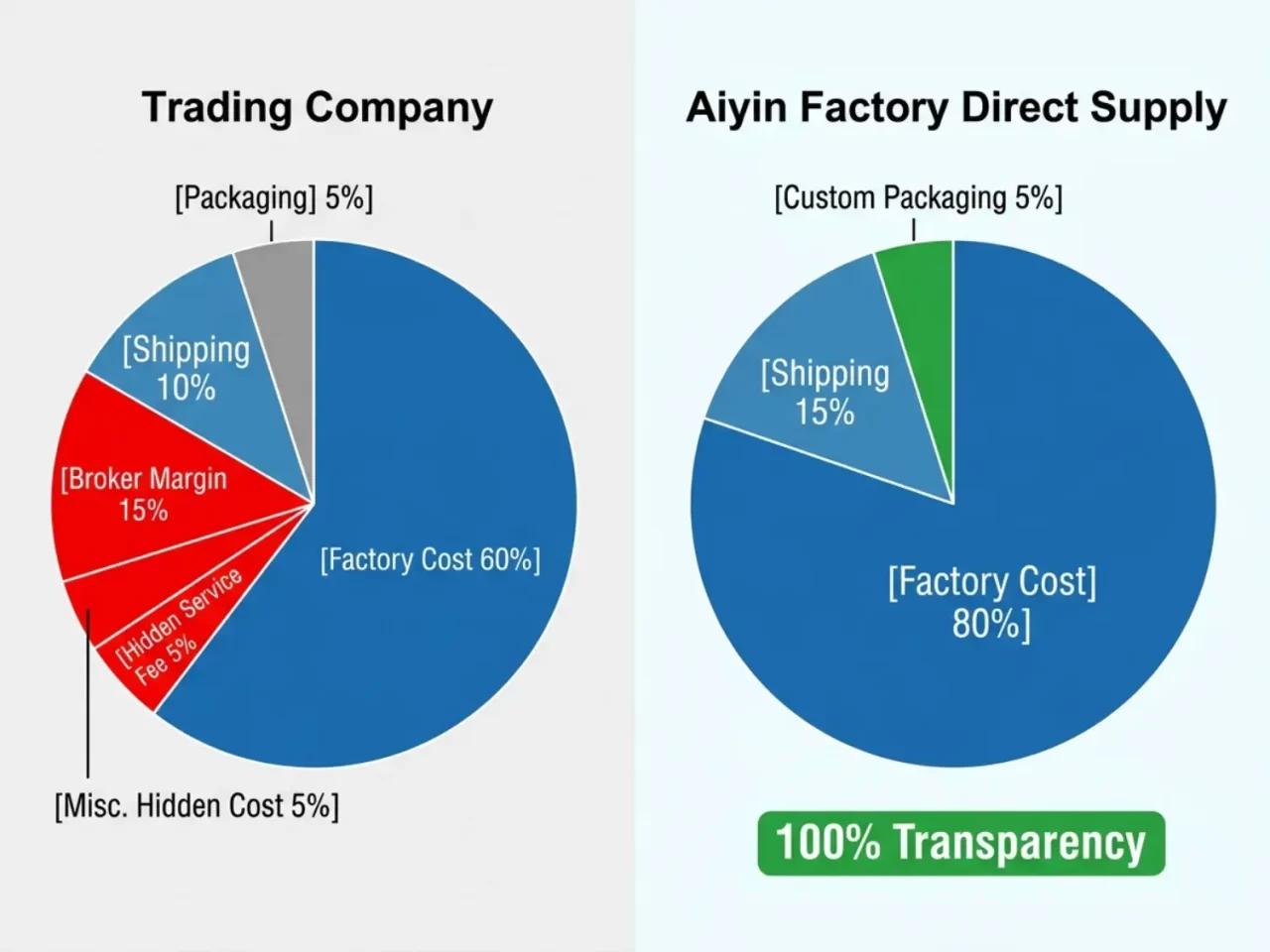
Hidden Cost #1: Markups Disguised as Competitive Quotes
The first hidden cost is the easiest to miss. Trading companies often add extra margins quietly into the quote. Sometimes the markup is obvious. Sometimes it is buried inside packaging, accessories, or “service fees.”
The problem is not just paying more. The bigger issue is that you lose visibility into the real factory price. Once you cannot see the cost structure clearly, you also lose negotiation leverage. You do not know whether you are comparing two real offers or two versions of the same product with different layers of markup.
Hidden Cost #2: Limited Customization Creates Long-term Loss
Many trading companies sell standard SKUs. That is fine for simple orders, but it becomes a problem when you need product-market fit.
Common limits include:
- firmware changes
- branding and packaging changes
- interface customization
- paper compatibility adjustments
- app or connectivity modifications
If your thermal printer supplier cannot adjust these details, you may have to settle for a product that is technically usable but commercially weak. That usually leads to lower differentiation, lower customer satisfaction, and weaker margins.
In other words, the “cheaper” product may force you to compete on price instead of value.
Hidden Cost #3: Inconsistent Quality Across Orders
This is one of the most expensive risks.
Trading companies sometimes switch factories depending on price, availability, or internal relationships. That means the same model may not always come from the same source. Even if the printer looks identical, components may change.
Possible consequences:
- different printhead performance
- inconsistent housing or gears
- unstable paper feed quality
- varying battery or PCB quality
For your brand, this creates support headaches. Customers do not care that your supplier changed factories. They only know that the second batch performs worse than the first.
A stable thermal printer manufacturer with direct manufacturing factory control is much easier to audit and much easier to scale with.
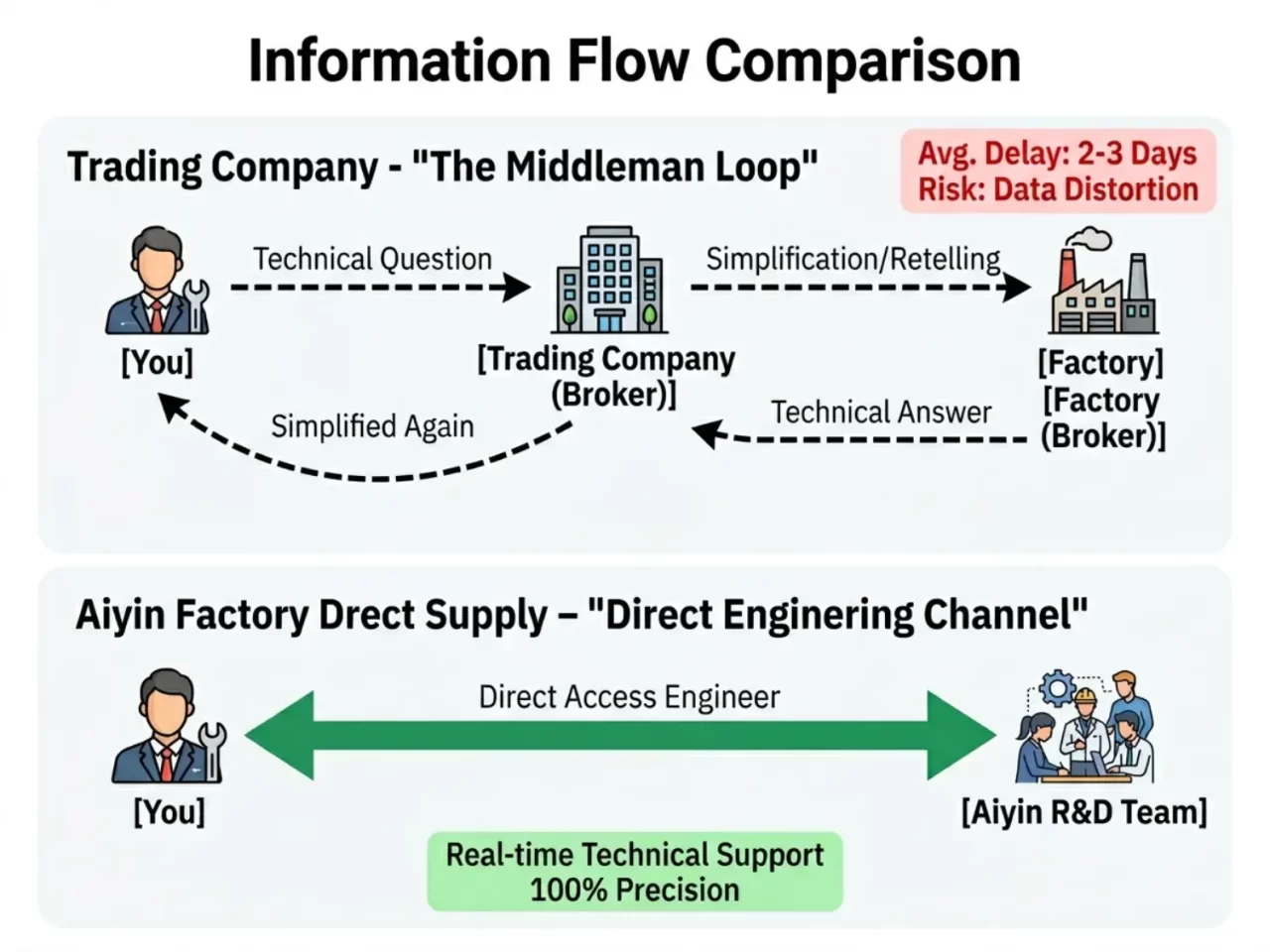
Hidden Cost #4: Communication Gaps and Technical Misalignment
Trading companies are middlemen. That creates a delay.
When you raise technical questions, trading companies usually turn to the factory for answers, and the factory often responds using professional terminology. To streamline communication, the trading company then simplifies and relays this information. The problem is that during this back-and-forth process, critical details may be diluted or lost, leaving you with a response that sounds correct but lacks precision—and may not be sufficient to support real decision-making.
This creates three problems:
- Lack of Technical Accuracy: Important specifications, tolerances, or performance details may be oversimplified, leading to misunderstandings or incorrect assumptions.
- Inefficient Communication: Each question requires multiple rounds of back-and-forth between you, the trading company, and the factory, slowing down the decision-making process.
- Limited Problem-Solving Capability: Without direct access to engineers or technical teams, it becomes difficult to resolve complex issues or customize products effectively.
For thermal printers, that can be serious. A small mistake in connectivity, printhead resolution, or paper path design can affect the entire product experience.
A direct thermal printer manufacturer can usually shorten this loop. A trading company often cannot.
Hidden Cost #5: Weaker After-Sales Support
Thermal printers are not just boxes. They involve firmware, print mechanics, consumables, and connectivity. When something goes wrong, you need technical support.
Trading companies often have limited engineering capability. That means:
- slower troubleshooting
- shallow answers
- weaker root-cause analysis
- more back-and-forth before resolution
The result is longer downtime and higher internal labor costs on your side.
A real thermal printer supplier should be able to explain issues at the component level, not just say “please restart” or “please test again.” If support feels generic, your future support cost is already hidden in the price.
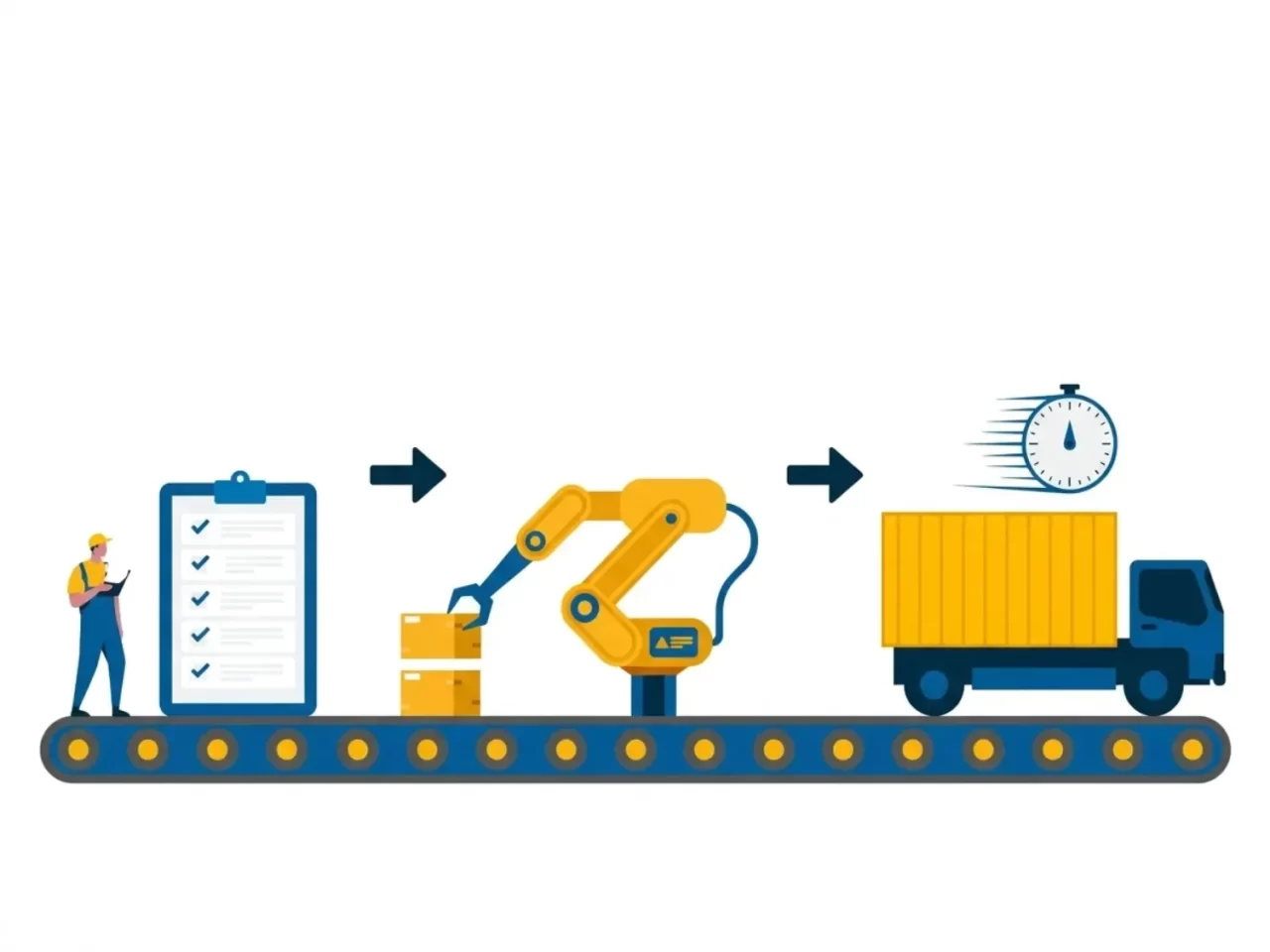
Hidden Cost #6: Longer Lead Times and Less Production Control
Every extra coordination layer slows the process.
If there is a production issue, a label change, a packaging update, or an urgent shipment request, the trading company must coordinate with the factory before anything moves. That adds delay to every decision.
This is not just a delivery issue. It affects:
- launch timing
- inventory planning
- seasonal campaigns
- replacement stock management
A one-week delay in a printer project can become a sales problem later. For brands that sell through e-commerce or retail channels, that delay can cost more than the original price difference.
Hidden Cost #7: No Direct Access to Factory Innovation
If you buy through a trading company, you are also cut off from the factory’s R&D pipeline.
That means you may miss:
- new firmware improvements
- better printhead options
- lighter or stronger housing materials
- battery upgrades
- new connectivity modules
Over time, this matters. Direct access to factory development helps you stay competitive. Without it, you are always one step behind the market.
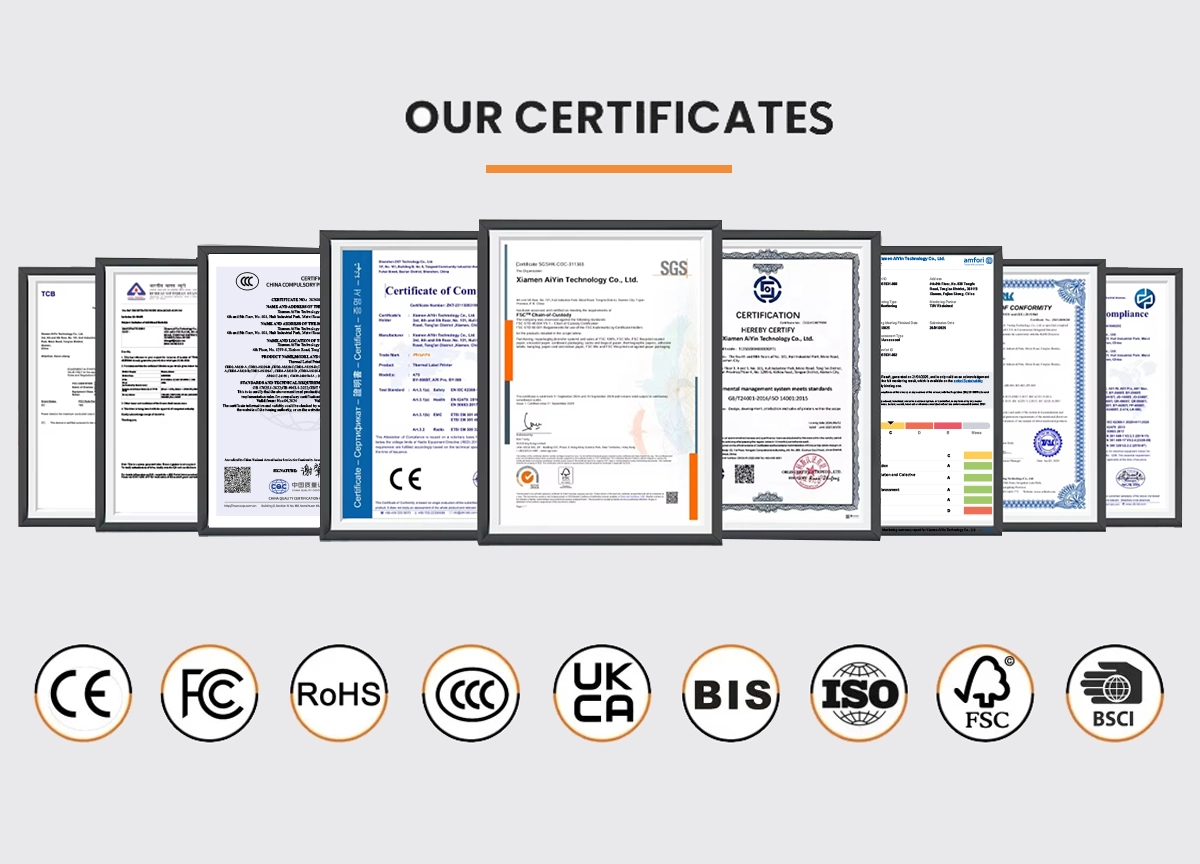
Hidden Cost #8: Certification and Compliance Risk
This one is dangerous because it can block sales completely.
Sometimes certificates are generic, outdated, or not matched to the exact model you buy. That may not be obvious until customs, marketplace review, or local compliance checks expose the problem.
The risk includes:
- customs delays
- rejected shipments
- compliance disputes
- blocked market entry
For international buyers, this is not a paperwork issue. It is a revenue issue. A good thermal printer supplier should provide model-specific certifications and supporting documents that match the actual product configuration.
Total Cost of Ownership Comparison Table
| Cost Component | Trading Company Risk |
|---|---|
| Customization cost | Higher later |
| Quality risk | Inconsistent |
| Lead time impact | Slower response |
| After-sales support | Weaker |
| Compliance risk | Higher |
| Innovation access | Limited |
When a Trading Company Still Makes Sense
This is not a blanket rejection. A trading company has its edges as well.
A trading company can still work when:
- You need a small trial order
- You are sourcing many unrelated product categories
- You do not need customization
- Speed matters more than control
But it is a weak model for scaling brands, long-term supply chains, or products that need technical precision.
How to Reduce Risk When Sourcing Thermal Printers
If you still want to buy through a trading company, do not do it blindly. Ask for:
- Factory verification
- Production photos and videos
- Model-specific certifications
- Sample testing before bulk order
- Clear after-sales responsibility
- Make comparison quotes from at least two sources
If the thermal printer supplier cannot answer technical questions clearly, cannot prove factory access, or cannot show matching compliance documents, treat that as a warning sign.
Conclusion
Trading companies offer convenience, but convenience has a price. The hidden costs show up later in quality, support, lead time, compliance, and lost product control.
For serious buyers, the real goal is not just a lower price. It is cost efficiency, control, and consistency. If you understand the hidden costs clearly, you will make better sourcing decisions and avoid expensive mistakes later.
About Aiyin – You One-Stop Thermal Printer Supplier
As a direct thermal printer manufacturer, Aiyin focuses on serving B2B clients with wholesale thermal printers, and full technical support and production control. Aiyin provides certified products that meet relevant compliance standards, ensuring stable quality and market access.
With in-house engineering teams, we can directly diagnose and resolve firmware, hardware, and connectivity issues without delays. Flexible OEM/ODM thermal printer services are available at Aiyin, including customization of design, firmware, interfaces, and packaging, helping brands build differentiated and reliable printer solutions.