The kids AI printer market is emerging at the intersection of educational toys, portable printing technology, and artificial intelligence. As parents and educators explore more interactive ways to support children’s creativity, AI-powered printing devices are attracting attention for their ability to turn digital ideas into physical drawings, stickers, and learning materials.
According to Grand View Research, the global educational toys market is projected to grow from USD 75.3 billion in 2026 to USD 118.8 billion by 2030. Meanwhile, The Business Research Company forecasts that the global mini sticker printer market will reach USD 1.96 billion by 2030, indicating growth in a related portable printing category. These figures do not represent the size of the kids AI printer market itself, but they provide useful context for evaluating its future potential.
Grand View Research https://www.grandviewresearch.com/industry-analysis/educational-toys-market-report
What Is a Kids AI Printer?
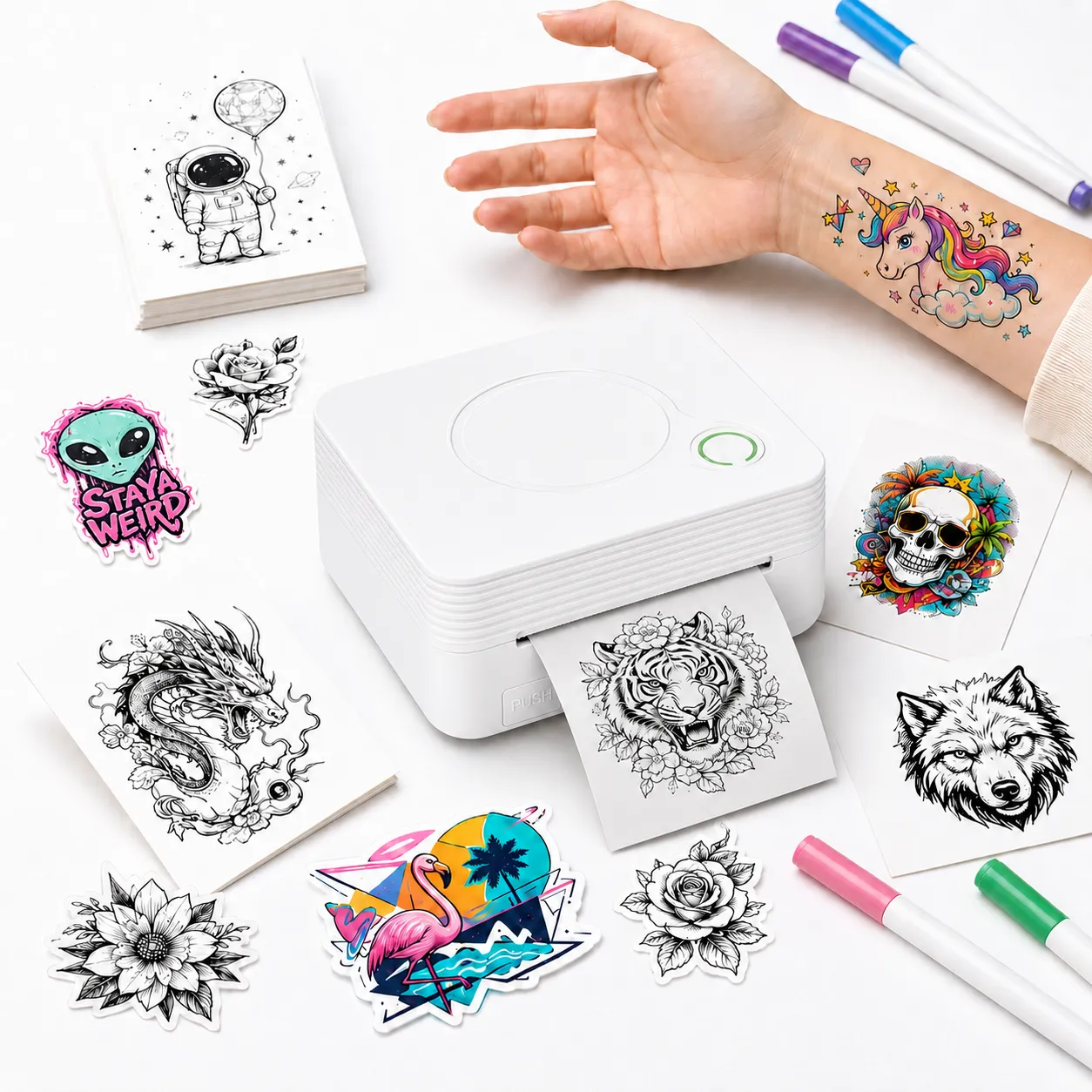
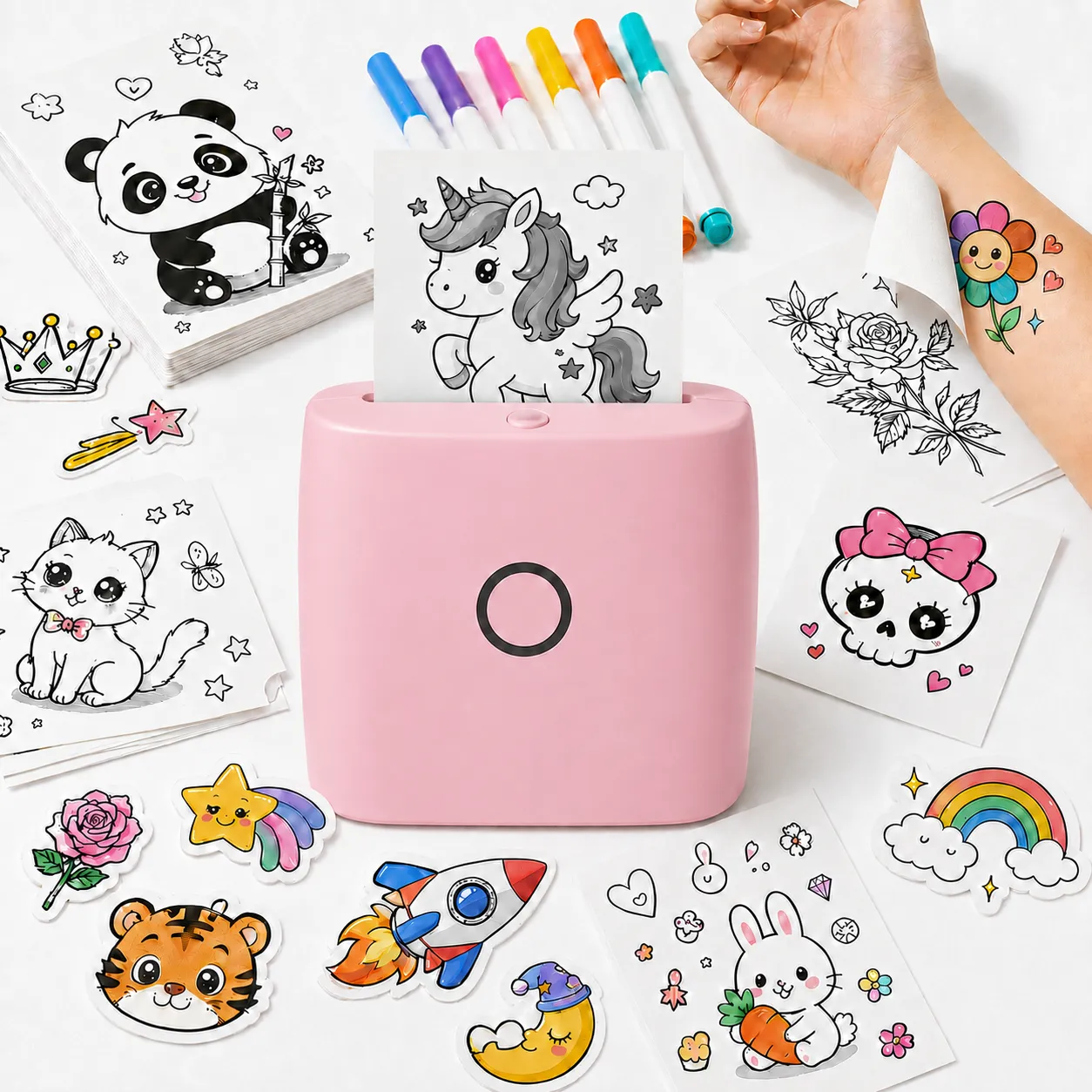
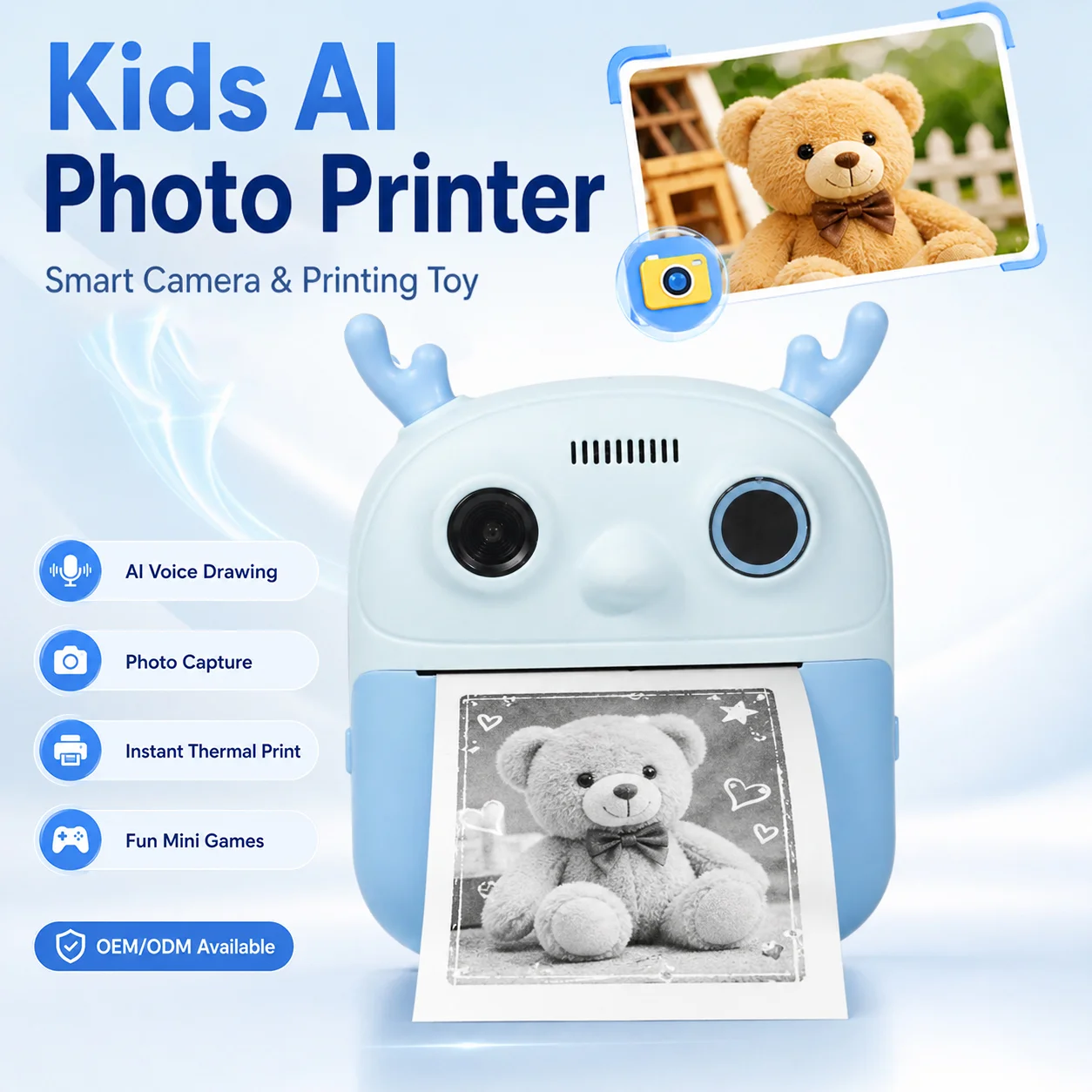
A kids AI printer is a compact printing device that combines printing technology with AI-powered content creation. Unlike traditional mini printers that mainly reproduce existing images or text, an AI-enabled printer can work with software that generates new content based on user instructions.
For example, children may enter a simple description such as “a dinosaur playing football.” A connected AI application can transform that idea into a printable illustration. Depending on the product, users may also generate coloring pages, educational flashcards, story illustrations, or personalized stickers.
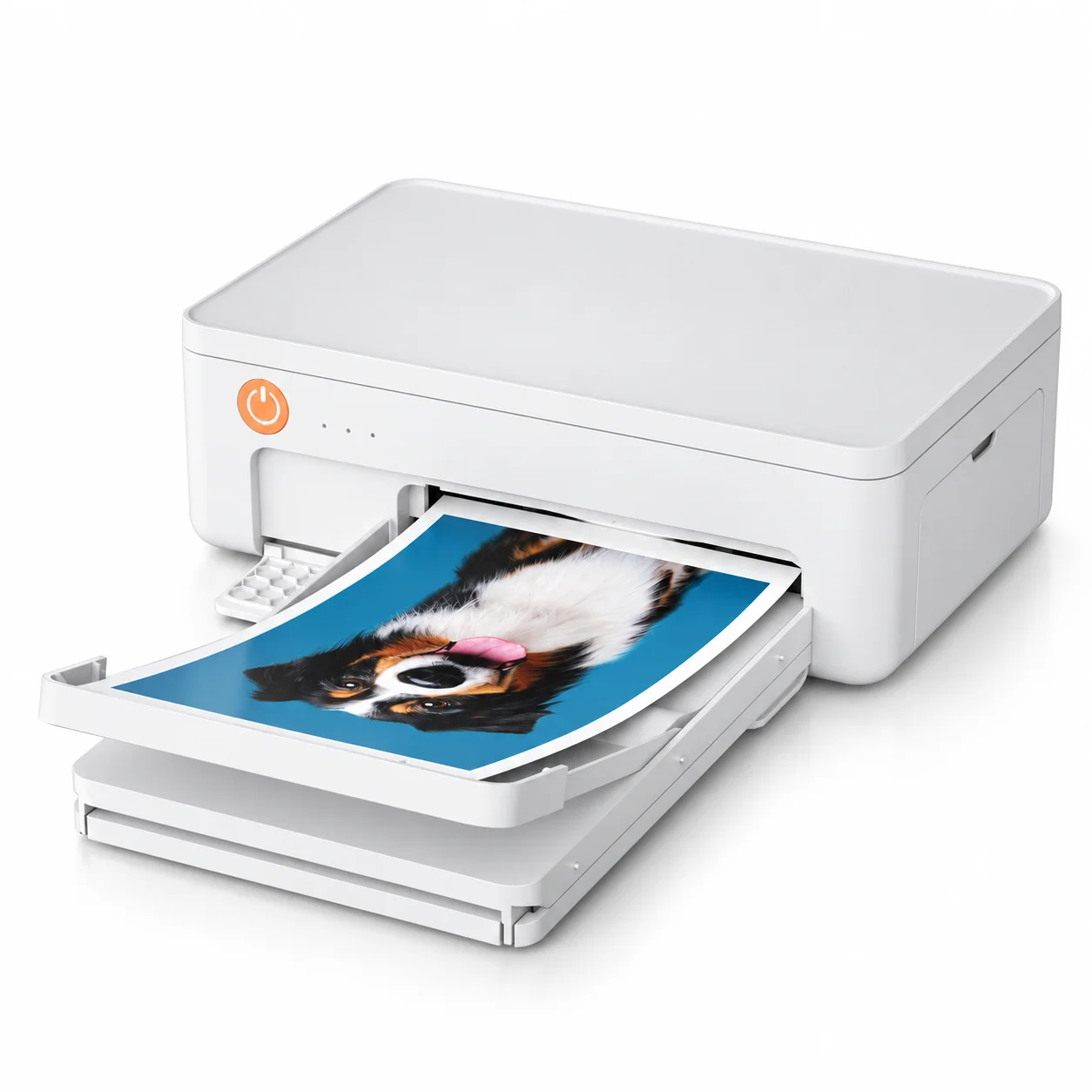
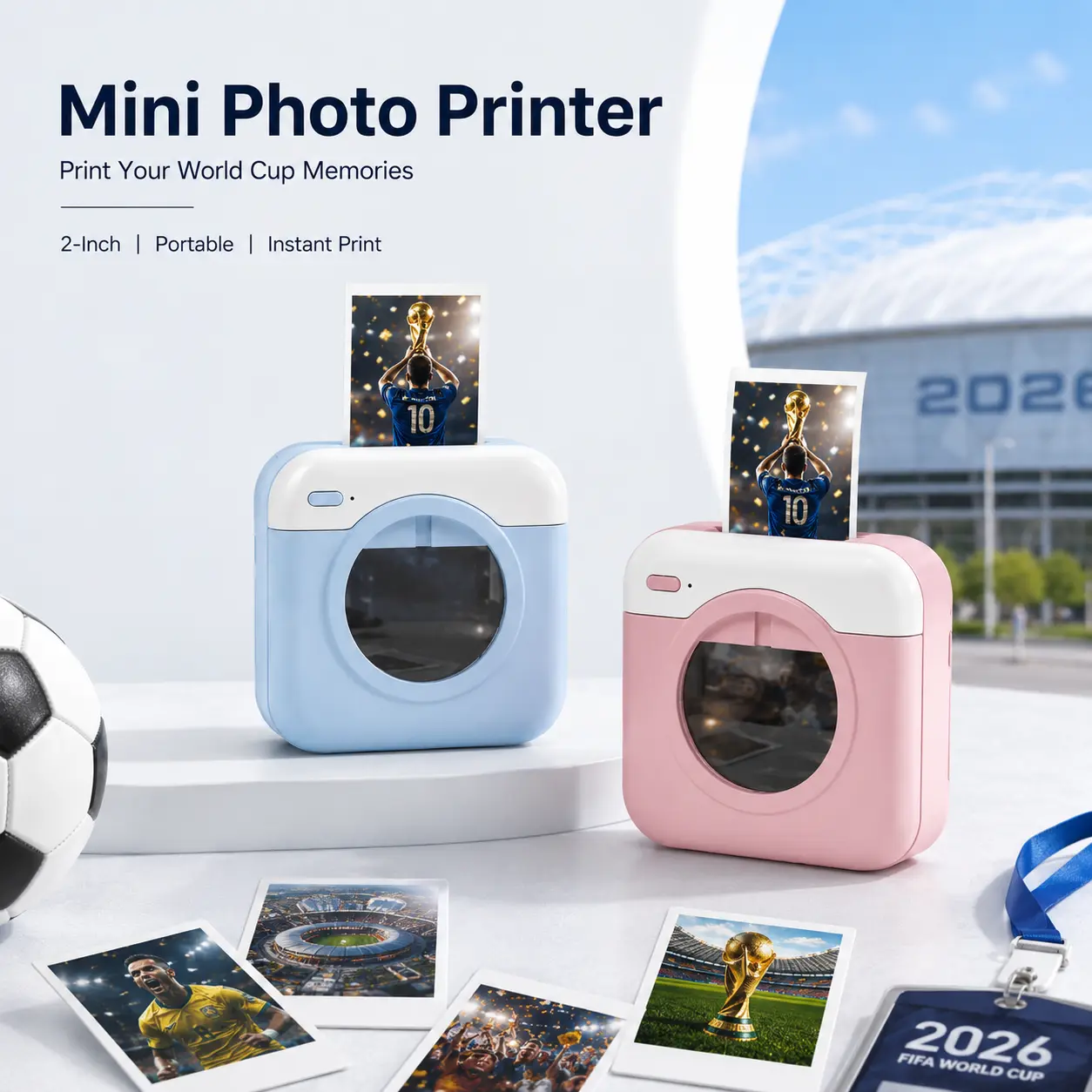
Many compact models use direct thermal printing technology, which produces images on heat-sensitive paper without requiring ink cartridges. However, AI functionality varies between products. Some printers rely on cloud-based AI applications rather than processing AI tasks inside the device.
Kids AI Printer vs. Traditional Mini Printer
| Fonctionnalité | Imprimante AI pour enfants | Traditional Mini Printer |
|---|---|---|
| Content Creation | AI-generated and existing content | Mainly existing content |
| Personnalisation | Text prompts, creative templates | Basic editing and templates |
| Educational Use | Coloring pages, flashcards, stories | Notes, labels, basic images |
| Connectivité | Often app or cloud-connected | Bluetooth, USB or Wi-Fi |
| Primary Value | Interactive creation and learning | Convenient portable printing |
How Large Is the Kids AI Printer Market in 2026?
The kids AI printer market is still a developing product category, and a widely established, independently verified global market size is not currently available from the major research sources examined for this article.
One reason is that AI-enabled children’s printers may be classified under several existing markets, including educational toys, portable thermal printers, mini sticker printers, and consumer electronics.
Instead of treating these categories as identical, it is more useful to examine their market sizes separately and understand how they relate to the development of AI-powered printing products.
However, gaining an understanding of these related industries can provide a foundation for the development of AI-printed products.
Global Market Size of Related Industries
| Related Market | Market Size in 2026 | Future Market Forecast | CAGR |
|---|---|---|---|
| Educational Toys | USD 75.3 Billion | USD 118.8 Billion by 2030 | 12.0% (2024–2030) |
| Mini Sticker Printers | USD 1.34 Billion | USD 1.96 Billion by 2030 | 10.1% (2026–2030) |
| Imprimantes thermiques | USD 6.0 Billion | USD 9.3 Billion by 2033 | 6.5% (2026–2033) |
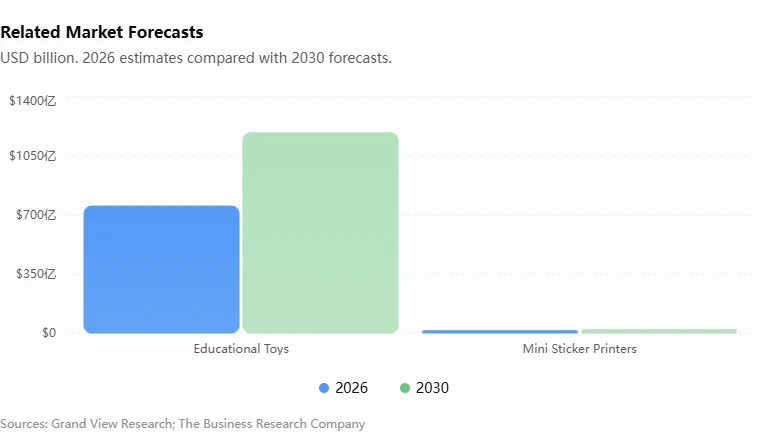
The educational toys industry provides the broader consumer demand context. Its projected expansion suggests continued opportunities for products that combine play, creativity, and learning. The mini sticker printer market offers a closer comparison in terms of device format, portability, and printing applications.
The thermal printer market, meanwhile, reflects the broader industrial and consumer adoption of the underlying printing technology. However, much of that market is associated with commercial applications such as retail, logistics, and labeling rather than children’s products.
Together, these indicators suggest a potentially favorable environment for kids AI printers, although the category’s actual market size and growth rate will depend on product adoption, pricing, software experience, and consumer demand.
What Is Driving the Growth of Kids AI Printers?
Growing Demand for Educational and Creative Toys
Educational toys are increasingly designed to encourage active participation rather than passive entertainment. Products that combine creative activities, problem-solving, and hands-on interaction may appeal to parents seeking alternative learning experiences for their children.
Grand View Research estimates that the educational toys market will grow at a CAGR of 12.0% from 2024 to 2030, supported partly by increasing awareness of early childhood education.
Kids AI printers could benefit from this trend by transforming children’s ideas into physical activities. For example, generating and printing a coloring sheet allows a child to interact with AI-generated content away from a screen, provided the activity is designed appropriately.
AI-Powered Personalization and Creative Learning
One of the main advantages of AI-enabled printing is content personalization.
Traditional children’s activity books contain fixed illustrations and exercises. AI-supported applications can potentially generate different themes, characters, and learning materials based on individual interests.
A child interested in dinosaurs might create dinosaur-themed alphabet cards, while another could generate ocean-themed coloring pages. This flexibility may increase the variety of activities available from a single device.
However, AI-generated educational content still requires age-appropriate design, quality control, and parental supervision.
Rising Interest in Portable and Inkless Printing
Portability and ease of use are important considerations for compact consumer printing devices.
Many miniature thermal printers eliminate the need for ink cartridges and use lightweight paper rolls, making them suitable for everyday printing activities. Their compact design also supports storage and use in different environments.
The Business Research Company’s mini sticker printer report projects growth from USD 1.34 billion in 2026 to USD 1.96 billion in 2030. The report identifies portable inkless printing and mobile-connected design platforms among the relevant market trends.
For kids AI printer brands, combining compact hardware with creative AI software could provide a way to differentiate products from ordinary portable printers.
DIY Crafts and Personalized Gifts
Kids AI printers can also fit into the broader category of personalized creative products. Printed drawings, decorative stickers, greeting cards, and customized activity sheets may appeal to families looking for hands-on projects.
These applications also create opportunities for gift-ready bundles that include a printer, paper rolls, stickers, and creative activity materials.
Which Regions Offer the Greatest Opportunities for Kids AI Printers?
Regional demand for kids AI printers is likely to be influenced by educational toy spending, consumer purchasing power, distribution channels, and interest in portable creative electronics.
Although reliable country-level sales rankings specifically for kids AI printers are not yet available, broader educational toy and portable printer market research can help identify regions worth evaluating.
North America: An Established Educational Toy Market
North America is an important region for evaluating kids AI printer opportunities because of its established educational toy industry and consumer retail channels.
According to Grand View Research, North America accounted for approximately 30.5% of the global educational toys market in 2023, with the United States representing a significant share of regional sales.
For kids AI printers, potential distribution channels include online marketplaces, toy retailers, educational product suppliers, and private-label consumer brands. Products positioned around creative learning, family activities, and personalized gifts may be worth testing.
Europe: Educational Value, Safety, and Compliance
European markets such as Germany, the United Kingdom, and France offer potential opportunities for creative educational products.
However, product compliance is especially important. Depending on the device’s intended use and legal classification, importers may need to evaluate EU toy safety requirements, applicable electrical and electromagnetic compatibility rules, battery requirements, and children’s data protection.
Products with clear age recommendations, reliable construction, appropriate materials, and accessible parental controls may be better positioned for long-term distribution.
Asia-Pacific: Growing Opportunities for Portable Creative Devices
Asia-Pacific is another region worth monitoring. Countries such as Japan and South Korea have established consumer electronics and stationery markets, while Southeast Asian countries offer opportunities through online retail and regional distribution networks.
Grand View Research projects that Asia-Pacific’s educational toys market will grow at approximately 13.1% CAGR over its 2024–2030 forecast period. Separately, The Business Research Company identifies Asia-Pacific as the fastest-growing region in its mini sticker printer market forecast.
These related indicators suggest that Asia-Pacific deserves attention when evaluating future distribution opportunities, although they do not establish a specific regional growth rate for kids AI printers.
Middle East: Potential in Gifts and Family Entertainment
The Middle East, particularly the United Arab Emirates and Saudi Arabia, may provide opportunities for gift-oriented consumer electronics and children’s creative products.
For importers and distributors, localized packaging, suitable power and charging specifications, language support, and compliance documentation should be considered before introducing products.
Arabic-language software interfaces and culturally appropriate creative templates could also help brands adapt their products to local consumer preferences.
Regional Market Opportunities at a Glance
| Region | Key Markets | Potential Opportunities | Buyer Priorities |
|---|---|---|---|
| North America | US, Canada | Educational toys, creative gifts | Product differentiation, safety |
| Europe | Germany, UK, France | Learning products, family activities | Compliance, reliability, privacy |
| Asia-Pacific | Japan, South Korea, Southeast Asia | Portable printing, creative stationery | Compact design, app experience |
| Middle East | UAE, Saudi Arabia | Gift products, family entertainment | Localization, packaging, distribution |
Regional opportunities are qualitative assessments based on related markets, not verified kids AI printer sales rankings.
What Are the Key Kids AI Printer Trends for 2026–2030?
As AI technology and portable printing continue to evolve, future product competition may increasingly focus on creative content, ease of use, educational applications, and customization rather than printing hardware alone.
Several product development directions are particularly relevant for manufacturers, wholesalers, and consumer brands.
Trend 1: AI-Generated Coloring Pages and Creative Content
AI-generated coloring pages could become an important application for children’s printing devices.
Instead of choosing only from predefined images, users may generate custom illustrations by entering simple descriptions. Themes can include animals, vehicles, fantasy characters, holidays, and nature.
For manufacturers, this creates opportunities to develop printers with integrated creative templates, easy-to-use applications, and age-appropriate content filtering.
Trend 2: AI-Assisted Educational Printing
Educational functions could help differentiate AI printers from standard mini printers.
Potential applications include alphabet cards, vocabulary exercises, counting worksheets, matching activities, and personalized story illustrations. Content could be adapted to different ages, languages, and learning interests.
UNICEF’s Digital Education Strategy 2025–2030 emphasizes learning outcomes, evidence-based approaches, and equitable access to digital technologies. These priorities highlight the importance of designing AI-supported products around meaningful learning experiences rather than adding AI as a marketing feature alone.
Trend 3: Smarter Mobile Applications and AI Connectivity
Software will likely play a larger role in determining the user experience of AI printers.
Future applications may offer simpler voice or text prompts, automatic image formatting, multilingual interfaces, creative libraries, and printing history management.
For wholesale buyers, software compatibility and long-term maintenance will be just as important as printing speed or device appearance.
Trend 4: Compact, Inkless, and User-Friendly Printing
Compact design and low-maintenance printing are likely to remain important features.
Direct thermal printing eliminates the need for ink cartridges, which can simplify everyday operation. However, image quality, paper durability, printhead life, and consumable compatibility still affect the overall user experience.
Manufacturers may focus on improving reliability, battery performance, paper replacement, and child-friendly operation.
Trend 5: OEM/ODM Customization and Private-Label Development
As more consumer brands explore AI-enabled products, OEM/ODM customization could become a meaningful business opportunity.
Customization options may include housing colors, brand logos, retail packaging, software interfaces, creative templates, and bundled accessories.
For distributors, customized products may help differentiate their offerings from generic mini printers and establish a more recognizable product identity.
Who Are the Main Buyers of Kids AI Printers?
The commercial potential of kids AI printers extends beyond individual families. Different business customers may view the product as an educational toy, a creative electronic device, a personalized gift, or a private-label retail item.
Understanding buyer requirements is essential for developing suitable product specifications, pricing strategies, and distribution partnerships.
Who Are the Main Buyers of Kids AI Printers?
| Buyer Type | Main Requirements | Business Opportunities |
|---|---|---|
| Toy Wholesalers | Competitive pricing, stable quality, bulk supply | Wholesale distribution |
| Educational Product Distributors | Learning content, safety, easy operation | Educational product bundles |
| E-commerce Brands | Product differentiation, packaging, accessories | Private-label products |
| Gift Importers | Attractive design, gift-ready packaging | Seasonal and gift collections |
| Consumer Electronics Brands | Software support, reliable hardware, customization | OEM/ODM development |
For example, a toy wholesaler may prioritize pricing and supply stability, while an educational product distributor may place greater emphasis on content quality and age-appropriate learning activities.
Similarly, private-label brands may require exclusive colors, customized packaging, multilingual applications, and consistent after-sales support.
What Business Opportunities Will Kids AI Printers Create by 2030?
The emerging kids AI printer category may create opportunities for manufacturers, wholesalers, educational suppliers, and consumer brands. However, success will depend on identifying suitable customer segments and offering products that solve practical needs.
Several business models are particularly worth considering.
Private-Label Kids AI Printers
Private-label development allows brands to introduce customized AI printing products without necessarily building a complete hardware production system.
By working with a qualified kids AI printer manufacturer, brands may customize product colors, logos, packaging, accessories, and selected software features.
This approach can be particularly attractive to existing toy brands, consumer electronics distributors, and e-commerce businesses seeking differentiated products.
Educational Printing Kits
AI printers can be packaged with learning activity materials to form complete educational product kits.
For example, a bundle might contain a portable printer, paper rolls, printable learning templates, and activity instructions. Different versions could be developed for early literacy, basic mathematics, creative drawing, or language learning.
This creates opportunities for educational suppliers to sell more than a standalone printing device.
Printer and Consumable Bundles
Consumables and accessories may become an important part of the business model.
Brands can offer printer bundles with additional paper rolls, adhesive thermal paper, protective cases, and creative accessories.
For wholesalers, a complete product package may simplify retail merchandising and provide opportunities for repeat accessory purchases.
Regional Distribution Partnerships
Different markets have different consumer expectations, languages, retail structures, and compliance requirements.
Manufacturers that can support localized packaging, multilingual software, flexible order quantities, and consistent product quality may be better positioned to work with international distributors.
Conclusion: Opportunities in the Kids AI Printer Market
The kids AI printer market represents an emerging opportunity within the broader educational toy and portable printing industries. While a reliable standalone market size is not yet established, forecasts for educational toys and mini sticker printers indicate growth in related product categories.
For toy wholesalers, importers, and consumer brands, opportunities may lie in AI-generated creative content, educational printing applications, private-label customization, and regional distribution.
Businesses exploring this market should focus on product reliability, safe AI experiences, suitable pricing, and partnerships with manufacturers capable of providing long-term support.
Looking for a reliable kids AI printer manufacturer? Explore our wholesale and OEM/ODM printing solutions. Contact our team to discuss product customization, bulk orders, and potential distribution partnerships.